COORDINATION 2025
28th International Conference on Coordination Models and Languages
Modern information systems rely increasingly on combining concurrent, distributed, mobile, adaptive, reconfigurable and heterogeneous components. New models, architectures, languages and verification techniques are necessary to cope with the complexity induced by the demands of today’s software development. Coordination languages have emerged as a successful approach, in that they provide abstractions that cleanly separate behaviour from communication, therefore increasing modularity, simplifying reasoning, and ultimately enhancing software development. Building on the success of the previous editions, this conference provides a well-established forum for the growing community of researchers interested in models, languages, architectures, and implementation techniques for coordination.
Topics
Topics of interest encompass all areas of coordination, including (but not limited to) foundational contributions, engineering techniques, tools, applications, and inter-disciplinary aspects.
A. Theoretical models and foundations for coordination
- Concurrency Theory, Composition, Distribution, Mobility, Time and Spatial Models
- Semantics, Logic, and Type Systems
- Probabilistic / Stochastic / Quantitative Models
- Formal Verification & Validation, and Model Checking
B. Coordination Paradigms & Languages
- Coordination Models & Language
- Session Types & Communication Protocols, Choreographies, Orchestration
- Actor and Agent-Based Systems
- Multi-agent systems, agent organisations, and societies
- Collective intelligence, Ensembles, Swarms, Self-organisation, and Emergence
- Bio-inspired / Nature-inspired Coordination
- AI-Driven & Learning-Based Coordination
C. Distributed & Pervasive & Modern Computing
- Microservices, Web Services, and Middleware
- Distributed, Reversible, Grid, Networked, Parallel and High-Performance Computing and Algorithms
- (Distributed) Run-time verification and monitoring
- Coordination across the continuum: IoT, Edge, Fog, Cloud
- Cyber-Physical Coordination, Context-awareness, Pervasive computing, Situatedness, and Human-Machine Hybrid Systems
- Decentralised systems, Peer-to-peer computing, Smart Contracts & Blockchain Applications
D. Software Engineering & Applications for Coordinated Systems
- Dynamic / Domain-Specific Software: Analysis, Models, Architecture, Patterns
- Programming Methodologies, Programming Languages
- DevOps, Continuous Integration, and Automation
- Business Process Modelling & Process Mining
- Digital twin networks, coordination of the digital thread
- Industrial Applications & Case Studies across fields (swarm robotics, vehicular networks, smart cities and ecosystems)
- GenAI/LLM-based Approaches to Engineer Coordination
E. Cross-Cutting and Multi-/Inter-/Trans-Disciplinary Aspects
- Security, Privacy, and Dependability in Coordination
- Adaptation, Reconfiguration, and Self-* properties
- Interdisciplinary & Societal Aspects of Coordination
F. Coordination Platforms, Middleware, and Tools
- Simulation Tools and Platforms
- Specification, Modelling, and Domain-specific Language Implementations and Workbenches
- Verification & Validation, Visualisation, and Testing Tools
- Distributed Middlewares and Platforms
- Datasets and Benchmarks for Coordination Systems
Programme Committee co-chairs
- Roberto Casadei , University of Bologna, Italy
- Fatemeh Ghassemi, University of Tehran, Iran
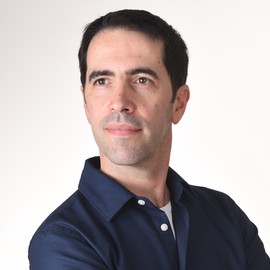
José Proença
Assistant Professor
José Proença is an Assistant Professor at Faculty of Science of the University of Porto, and a researcher at the Research Center in Real-Time & Embedded Computing Systems, ISEP, in Portugal. His core research targets coordination aspects and formal methods in the context of Cyber-Physical Systems. He is actively involved in a NextGenerationEU project and in 1 FCT project. He currently belongs to the steering committee of 2 international conferences in fundamental computer science, he chaired the program committee of 6 international research venues with edited proceedings, edited 2 journal volumes, and was the member of 19 program-committees of international venues.